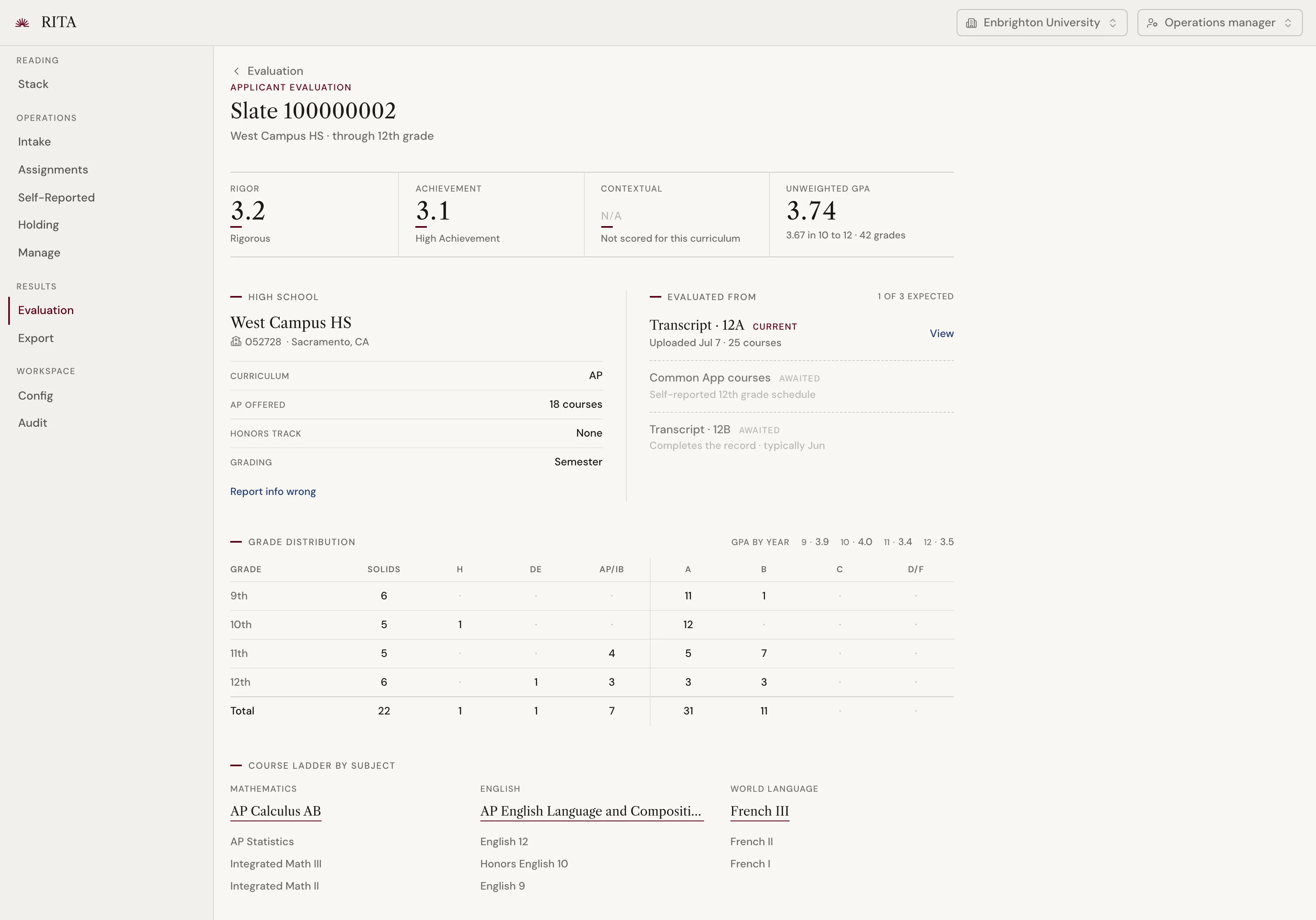
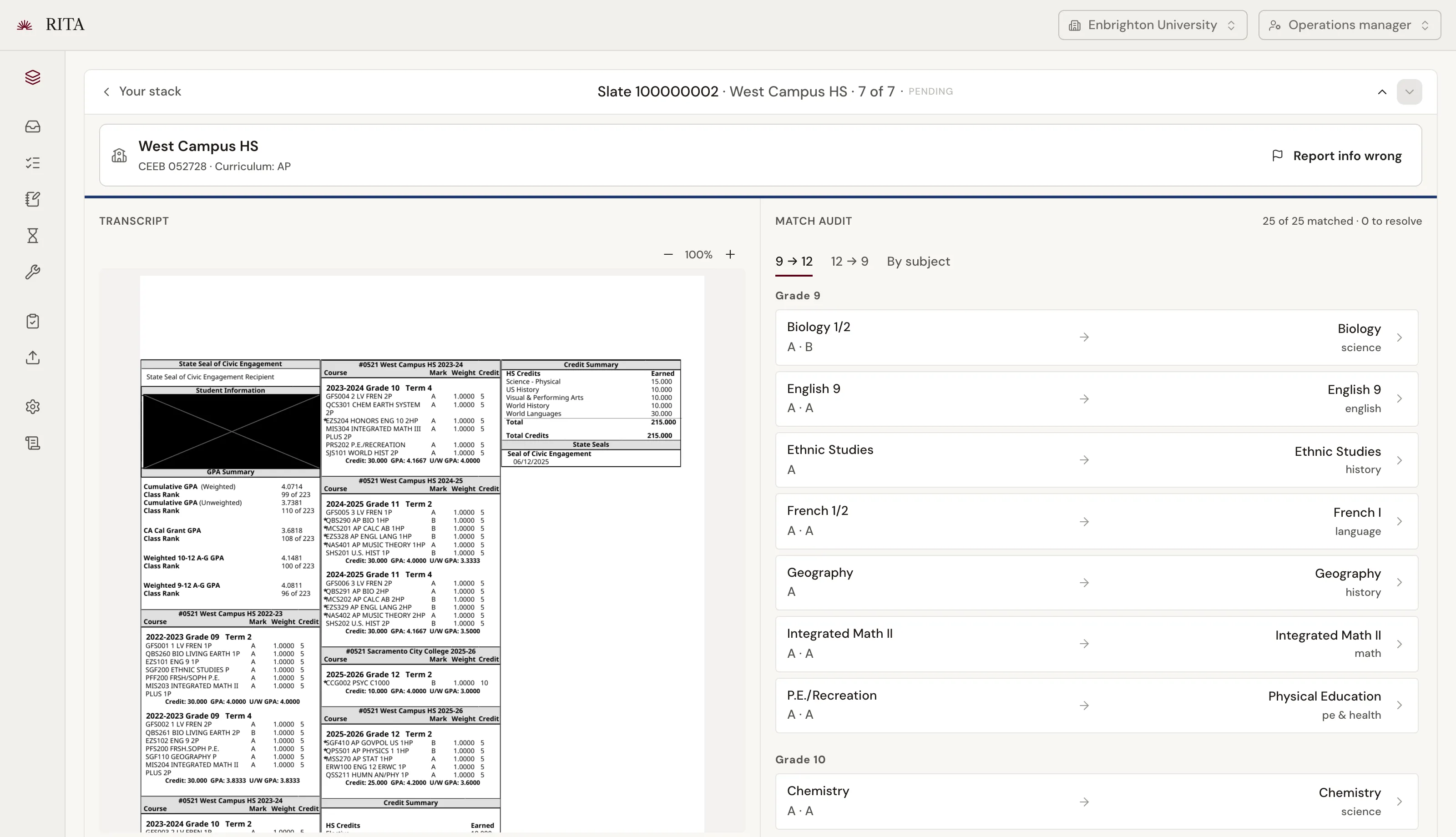
An admissions reader works through a whole season of transcripts, from schools that all print grades differently. RITA reads them first. It parses each transcript and matches every course to a shared catalog, so the reader gets a GPA and a rigor picture they can check against the page it came from.
When I joined Enlighten Lab the parsing already worked. What didn’t exist yet was a product a university could trust with minors’ education records, so most of my first months went into FERPA controls, the data model and a full redesign. The long version of that is in the casework.
Every number shows its work
A GPA that a reader can’t reproduce is a GPA they’ll quietly redo by hand. So RITA’s numbers are always derived from the courses on screen, and a reader can pull any course out and watch the numbers follow. Try it with this transcript. The math is RITA’s own default policy, simplified to semester grades.
- Unweighted GPA
- 3.70
- 29 grades scored
- Weighted GPA
- 4.01
- +0.5 Honors, +1 AP, IB, DE
- AP, IB, DE
- 5
- 1 honors
- Courses counted
- 17
- of 17 on the transcript
Grade 9
Grade 10
Grade 11
Grade 12
Weighting is a per-university setting. So is whether summer grades count. The demo uses the defaults every new partner starts with.
Reading, set like a document
RITA used to look like every other admissions dashboard, full of cards and cool gray badges. But a reader isn’t watching metrics. They’re reading about a person. The redesign treats each applicant like a file on a desk, with serif names and numerals set on warm paper between hairline rules. Oxblood is saved for the few marks that deserve attention.
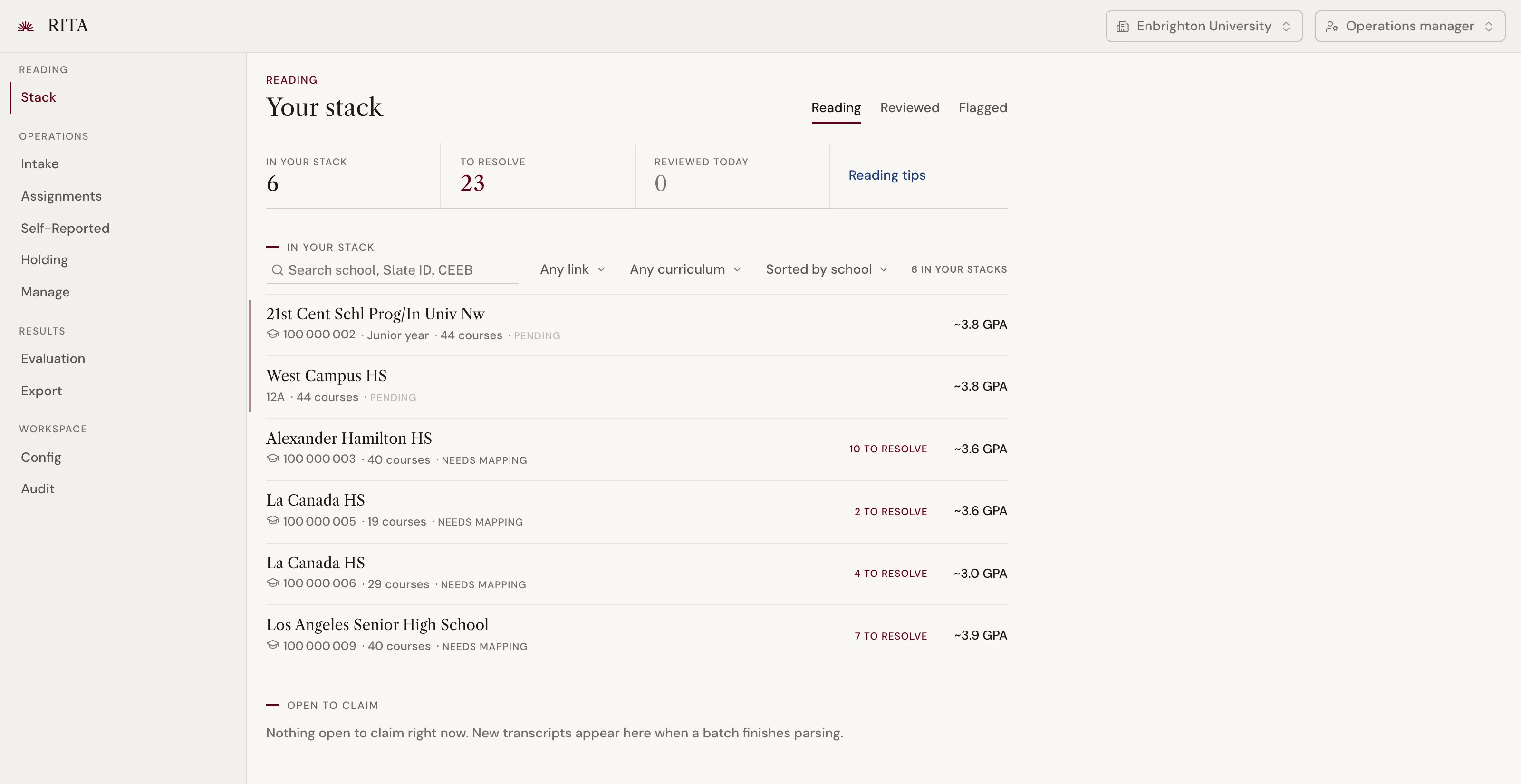
The reader’s day starts in the stack, a quiet list of who’s waiting and what still needs a human decision.