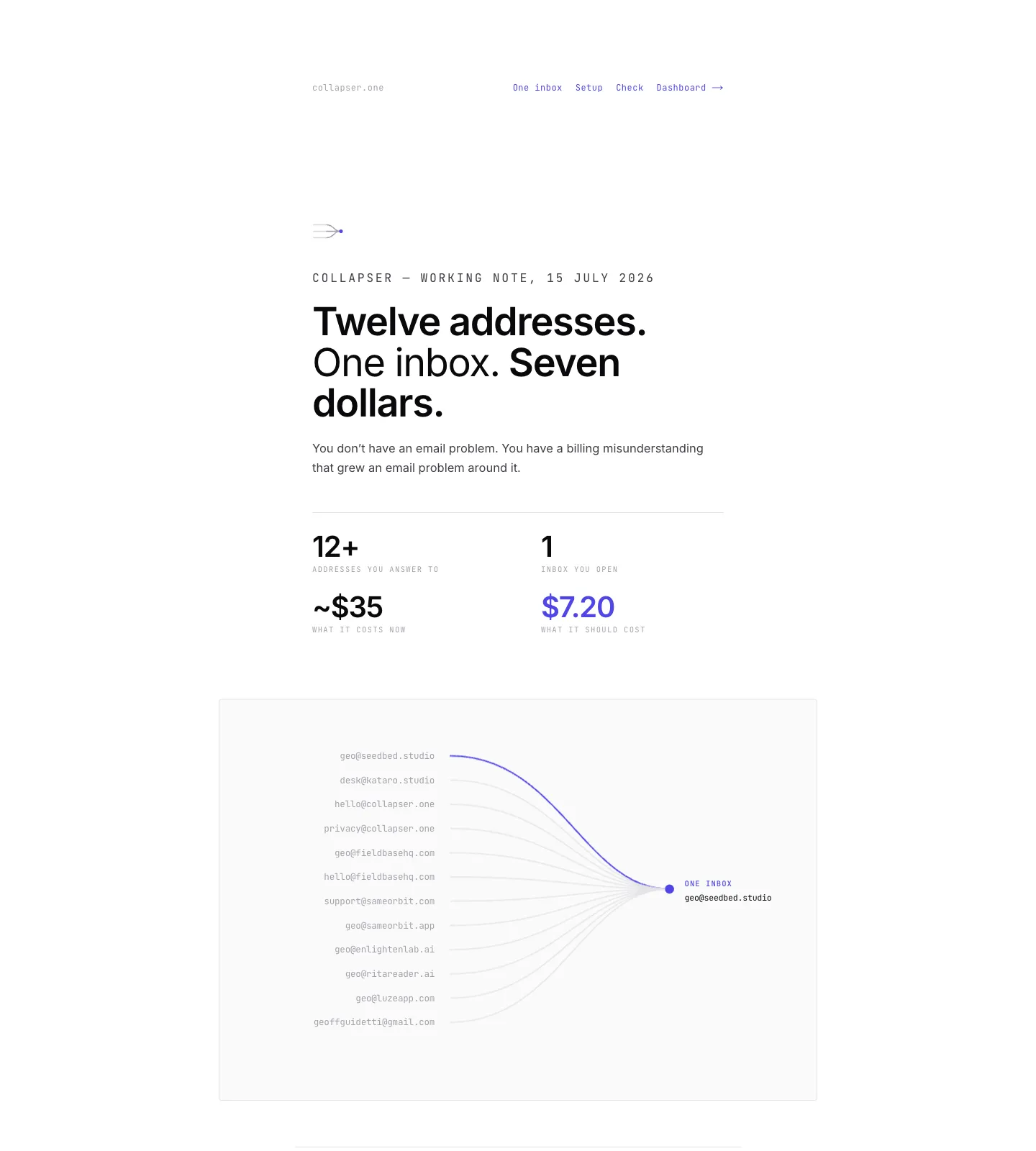
I answer to twelve email addresses across my projects. The default move is a new Google Workspace for each one, and every one of those is another login and another seat on the bill. Google already lets one Workspace hold every domain you own. Almost nobody knows, because the way there is buried under confusing docs and a zillion options.
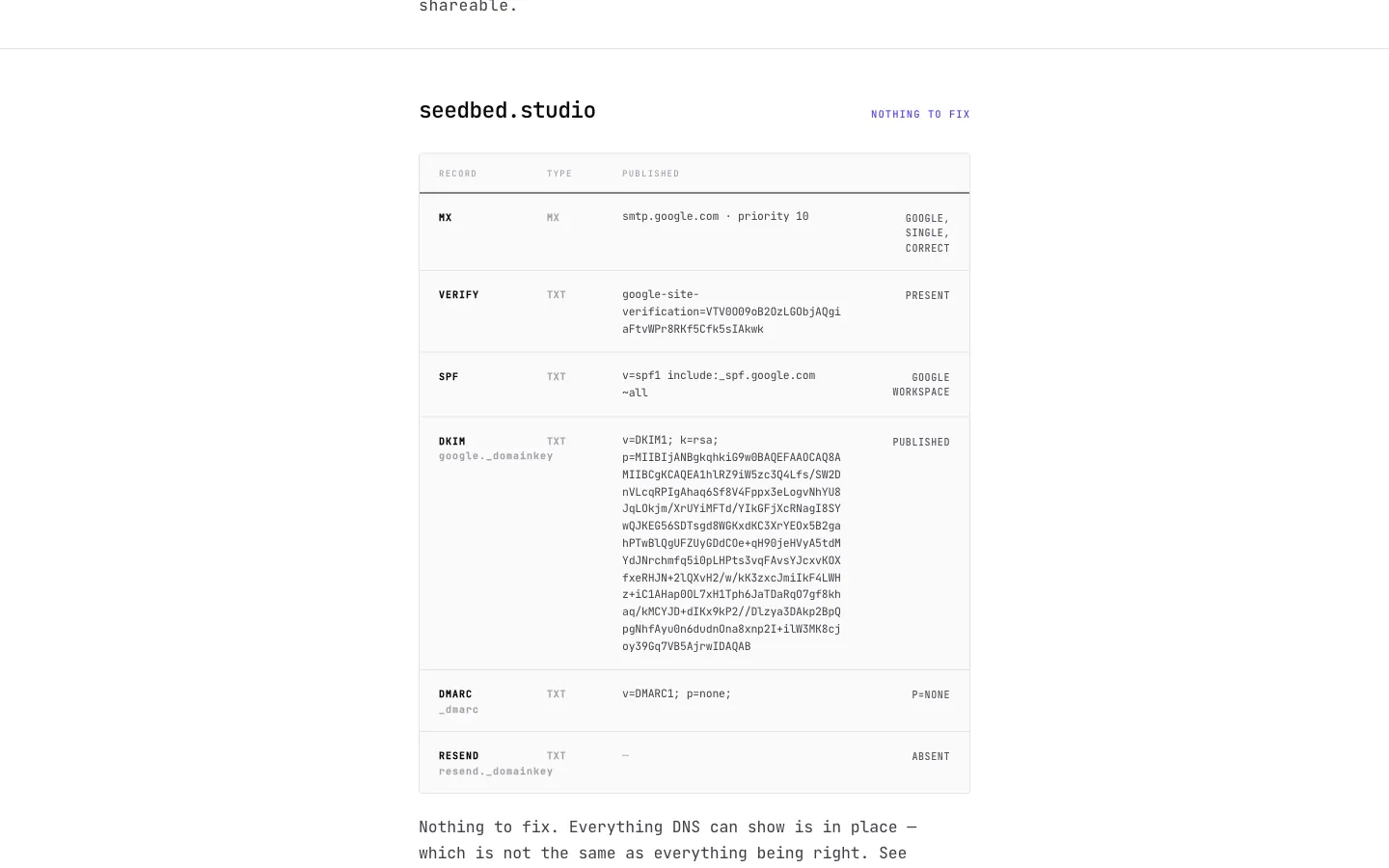
The Collapser walks you down that path. It reads your DNS and your Workspace, grades each domain against the collapsed setup, tells you exactly which record to change, and confirms when it’s done. It never touches your mail. If it disappeared tomorrow, your inbox wouldn’t notice.
- geo@seedbed.studioits own login
- PriyaBooked: Tuesday at 2pm
- VercelSeptember invoice
- hello@collapser.oneits own login
- SamDoes /check read subdomains?
- geo@sameorbit.comits own login
- TestFlightBuild 42 is ready to test
- JordanMap pins feel crowded
- support@fieldbasehq.comits own login
- DanaPilot crew is on the app
- LuisQuestion about the SMS consent
- geo@enlightenlab.aiits own login
- RITATranscript batch finished
Opinions in the vocabulary
Nothing in the app is ever marked good. There are no checkmarks anywhere. A domain is either quiet or it has a finding, and the finding says what to do about it.
The same record can read differently depending on who’s asking. On the public checker it’s just a fact about your DNS. On your dashboard, where the app knows you’re collapsing that domain, an old ImprovMX MX record becomes a trapdoor that mail falls through the moment Google blinks.
The first version was a mail router I built in two days and deleted two weeks later, once I figured out Google already did the hard part. That’s the more interesting story, and it’s all in the casework.